Stargate Experiments Around the World
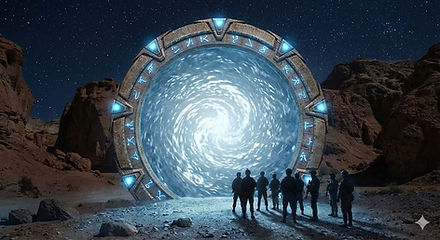
As the concept of Stargates captures our imagination, many wonder about the history and experiments conducted around the globe. But what exactly is a Stargate? Originating from science fiction, a Stargate refers to a hypothetical gateway that allows travel between distant locations in space, time, or alternate realities. The idea has led to numerous experiments, theories, and research initiatives aimed at exploring these cosmic passages.
What is a Stargate?
A Stargate is a portal that serves as a bridge between two points in the universe, eliminating the limitations of conventional travel. The term became popularized by the 1994 film "Stargate," which depicts an ancient device capable of transporting individuals across vast distances. Scientifically, the notion of a Stargate aligns with theories in quantum mechanics and wormholes, proposing that space can be folded to create shortcuts between two vastly different locations.
How a Stargate is Created
Creating a functional Stargate requires a deep understanding of physics, advanced technology, and an extraordinary amount of energy. Concepts suggest that a Stargate could be constructed using materials that manipulate electromagnetic fields or harness quantum entanglement. While theoretical blueprints have been outlined, no successful human-made Stargate has been realized. Most exciting endeavors are experimental, relying on advanced particle physics and the understanding of spacetime manipulation.
Countries around the globe have engaged in Stargate research, each contributing unique insights and technologies to this fascinating field. The United States, for instance, has conducted numerous experiments on quantum tunneling and teleportation. In the 1990s, the CIA and the Pentagon were involved in the infamous Stargate Project, aimed at investigating psychokinesis and ESP as potential military applications, which ultimately experienced mixed results and led to its discontinuation.
Global Experiments and Their Impact
Several nations have embarked on Stargate experiments, each demonstrating distinct methodologies and expectations. Russia's interest in the phenomenon has historical roots in its expansive space program. Researchers conducted experiments on the connection between psychic phenomena and the physical world, aiming to uncover any scientific basis for claims of teleportation. However, as in the U.S., these investigations yielded limited success, struggling to bridge the gap between theoretical frameworks and tangible results.
In China, advanced studies on particle physics have sparked interest in the universe's building blocks, leading to research aimed at connecting concepts of quantum mechanics with the Stargate phenomena. While formal Stargate projects remain elusive, theoretical physicists in China continue to explore possibilities, blending ancient philosophy with cutting-edge quantum research.
Failures and Challenges of Stargate Experiments
Despite the allure of Stargates, many challenges and failures plague experimentation efforts. One significant issue is the vast resources and energy required to manipulate spacetime. Theoretical frameworks often clash with the current understanding of physics, leaving many researchers questioning the feasibility of creating actual gateways. Additionally, ethical considerations arise in experimenting with teleportation and the unknown consequences it could have on human existence.
Discrepancies in scientific data and the subjective nature of experimental results have led to skepticism within the scientific community. The failures of the Stargate Project and similar initiatives serve as reminders of the complexities involved in such groundbreaking research. Concepts as ambitious as Stargates require a delicate balance between scientific integrity and the human desire to explore the unknown.
The fascination with Stargates continues to captivate our imagination, but whether they can exist in our reality remains a laughing matter among scientists. While the pursuit of unlocking these cosmic mysteries may not yield results immediately, the ongoing efforts reflect humanity's insatiable curiosity about the universe. As new technologies and understandings emerge, so too may our perspective on what is possible.


Comments